
carceral engagement
Enhancing Education for All
The institute’s commitment to carceral engagement aims to enhance education in prison, foster collaborative research in carceral studies, and reimagine reentry for individuals and communities to flourish.
Education
Through local, statewide, and national partnerships, the institute provides instruction for incarcerated individuals and correctional staff, while partnering with state and national organizations on best practices in education in prison.

- In partnership with the St. Joseph County Jail in downtown South Bend, the institute provides workshops that connect Notre Dame faculty to incarcerated students in cultivating self-expression through the arts, including a recent series of creative writing workshops.
- At Westville Correctional Facility, the institute instructs 3-credit Inside-Out courses and collaborates with Holy Cross College on the Moreau College Initiative (MCI). Inside-Out courses offer Notre Dame students the opportunity to learn alongside incarcerated students exploring interdisciplinary topics. MCI offers Notre Dame faculty the opportunity to teach courses in the liberal arts curriculum to incarcerated students pursuing A.A. and B.A. degrees.
- Across the state, the institute partners with Independent Colleges of Indiana and the Indiana Department of Correction (IDOC) to develop pathways of education across prison facilities through courses and degree programs offered by colleges and universities in counties throughout Indiana.
- Nationally, the institute collaborates with the Jesuit Prison Education Network in leading the Consortium of Catholic Higher Education in Prison, a coalition of partnerships between Catholic universities and the department of corrections in their respective states.
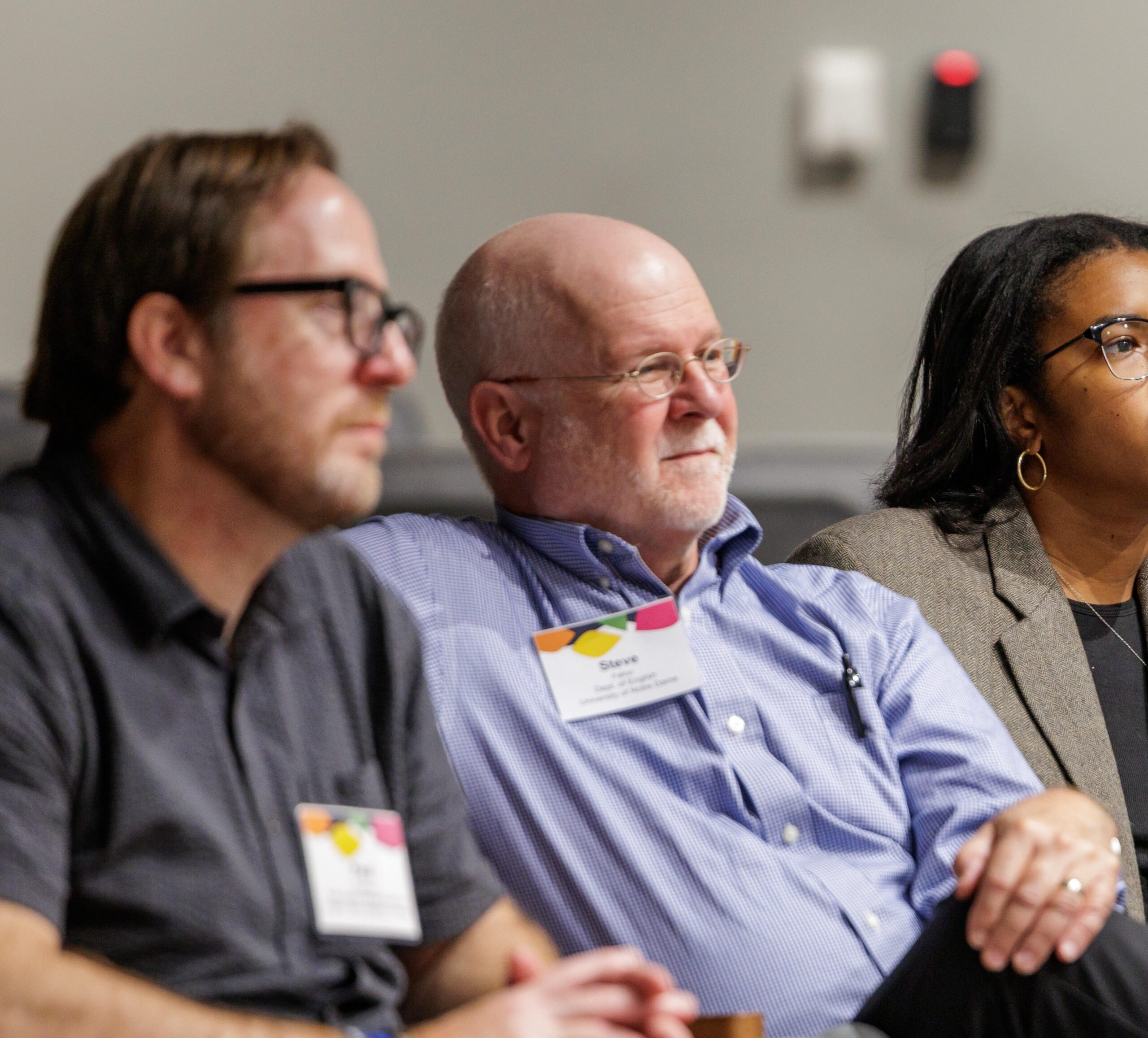
“Teaching in the college-in-prison program has been immensely rewarding, as the students at Westville are as hungry, hardworking, and bright as any I’ve taught in nearly four decades at Notre Dame. It’s been inspiring to see them grow in confidence and skills and gratifying to see our graduates upon release become productive members of their communities.”
–Stephen M. Fallon, the John J. Cavanaugh Professor of the Humanities Emeritus
Research
In collaboration with community partners, the institute produces cutting-edge research in carceral studies.

- The institute runs the Mass Incarceration Research Lab, which employs an interdisciplinary approach to research on the moral, normative, and empirical dimensions of mass incarceration. A collaboration between faculty, practitioners, individuals impacted by systems of incarceration, and both graduate and undergraduate students, the lab seeks to understand the criminal legal system with an aim towards transforming it. Particular areas of focus include pretrial justice, alternative forms of community safety, education in prison, and reimagining reentry best practices.
- With funding from the Franco Family Institute for Liberal Arts and the Public Good, the Crime & Justice Working Group gathers students and faculty across disciplines working on carceral studies with South Bend partners directly impacted by mass incarceration. This group seeks to develop local collaborative research that informs policy and shapes program delivery.
- The institute has piloted an innovative Postbaccalaureate Research Fellowship, an 11-month fellowship that gives recent Notre Dame graduates the opportunity to do research in the service of justice in South Bend. Recent fellows have focused their research on carceral engagement and reentry.

“I like to think that the voice of the formerly incarcerated is something that needs to be present during these conversations because we can theorize best practices and what the problems are, or we can listen to the people who are living through these problems and take their input and let them help us evaluate potential solutions.”
–Tommy Shannon, founder of Life After Conviction
Reentry
Working alongside returning citizens, the institute develops best practices and informed research on reentry—the process of transition back to the community after serving time in prison or jail.

- The institute’s commitment to reentry begins inside prison and jail with courses and workshops addressing life skills, vocational discernment, employability, financial literacy, and recovery, while also including individualized transition plans with students nearing release as they prepare to return to their home communities.
- On the outside, reentry includes building networks of housing providers, employers, educational institutions, and mental health services for returning citizens navigating transitions across Indiana. The institute offers support tailored to individuals during this process while also creating an alumni network among graduates of Inside Out and MCI programs in the local community and across the state. Alumni participate in institute courses as co-educators and contribute to research projects. The institute also compiled the comprehensive Indiana Reentry Guide for Returning Citizens.
- The institute also educates the public about the challenges to reentry through reentry simulations on campus, in the community, and at the South Bend Community Reentry Center.

Contact
Michael Hebbeler, M.A.
Assistant Director, Community Partnerships and Programs
574-631-5779
mhebbele@nd.edu
Jim Cunningham, MBA
Program Director for Reentry
574-631-7803
jcunni10@nd.edu