Virtues & Vocations is a national forum for scholars and practitioners across disciplines to consider how best to cultivate character in pre-professional and professional education. Virtues & Vocations hosts faculty workshops, an annual conference, and monthly webinars, and engages issues of character, professional identity, and moral purpose through our publications.
UPCOMING
Habit, Ritual & Well-being
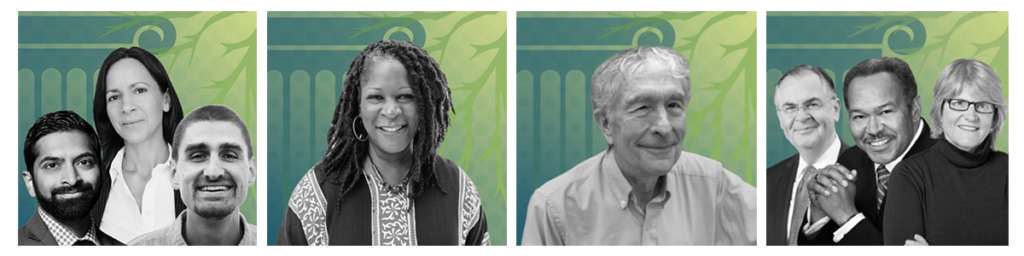
Michael Norton
author & Harvard Business School professor
Monday, February 23, 2026, noon – 1 pm
Virtues & Vocations spring magazine launch: Joy
authors from our spring 2026 issue will discuss their articles and the role of joy
Monday, March 23, 2026, noon – 1 pm
Civic Virtue
Rajiv Vinnakota
president, Institute for Citizens & Scholars
Monday, April 27, 2026, noon – 1 pm
The Institute for Citizens & Scholars collaborates with leaders in higher education, business and philanthropy to cultivate civic virtue and promote productive conversations across differences. We will discuss this work and moment with Raj Vinnakota.
Mattering
Jennifer Wallace
journalist & author
Monday, May 11, 2026, noon – 1 pm
Award-winning journalist Jennifer Wallace will join us to discuss her recently released book, Mattering.
UPCOMING
Our third annual conference will be held June 1-3, 2026 at the University of Notre Dame. The conference is a cross-disciplinary, cross-professional convening on cultivating character in the classroom and on campus, with a particular focus on professional education. Sign up here to be notified when registration opens.
We hosted conferences on Higher Education & Human Flourishing in 2024 and 2025 at the University of Notre Dame. For those who were unable to attend or who would like to revisit the conversation, we are pleased to offer the following resources:
Cover artwork: “Contemplating My Garden from Afar” by Agucho Velásquez
Good Medicine
Dad, Insurance, and Medicine
Ricardo Nuila
Growing up, I experienced healthcare the way most people in this country do, which is through private insurance. My pediatricians encountered no snags as they kept me on the vaccine schedule and ensured I didn’t fall too far off the growth curve. The doctor-patient relationship looked idyllic from my vantage point.
Essay
Navigating Purpose in an Age of Spaghetti Pathways
Michelle Weise
When I first met Dana Allen Walsh, a senior pastor at a progressive church in my hometown, it quickly became clear that we shared an abiding interest in the soul of work—the search for purpose and meaning through our vocations.
Employing Virtue
Zena Hitz
The Catholic tradition, following the suggestions of Plato and Aristotle, distinguishes work from leisure. Work is “servile”—it is a mere means to an end. The end of ends is leisure, where human beings act for the sake of acting and live for the sake of living. Leisure matters in and of itself. Human flourishing is structured by leisured activity. Work without leisure is scarcely a human life at all.
Good Labor
Dan Graff
My dad was a worker, and like all those who work for someone else, he didn’t have complete autonomy in his work life. To be sure, his union contract lifted standards, promoted fairness, and protected workers’ basic dignity, but ultimately it could only mitigate the power imbalance inherent in the workplace, not erase it.
In this article, Zena Hitz, Tutor at St. John’s College and founder and president of the Catherine Project, distinguishes between two kinds of work, hollow work and real work, aimed at a human good. Read more.
"She wasn't used to lying to anyone but herself."
I have a holiday ritual where I read the Booker Short List between Christmas and New Year’s. Indeed, it is a family tradition. So come January, I often focus on well-reviewed new books that might be a bit lighter but which still have strong, captivating narratives. I don’t want to have to work too hard. I want to think, but not have to puzzle through. Denise Mina’s The Good Liar is a great January book.
Why do good engineers make bad ethical choices?
“This question has been at the top of my mind for a long time,” said Jesse Pappas, Assistant Professor of Engineering and Society at the University of Virginia’s School of Engineering and Applied Science. “My suspicion has been that many students and professionals aren’t taking ethics personally enough, so it’s not internalized as part of their identity.”