

A Question of Justice:
Karla Badillo-Urquiola
How can online tools promote human flourishing?

When computer engineers design tools to protect minors on the internet, they often pull from a standard playbook: surveillance, tracking, and content bans. For computer engineer Karla Badillo-Urquiola, these well-meaning approaches strip agency from at-risk users. As the Clare Boothe Luce Assistant Professor in the College of Engineering, she is on a mission “to help rehumanize how we build these tools.”
Badillo-Urquiola’s research involves immersing herself within marginalized communities to learn firsthand what safety features would be most beneficial. “All of my work as a computer scientist involves community partners, ranging from youth in foster care to communities in the Global South,” she reflects. “Each partnership is rooted in a core conviction: that those most exposed to online risks must be at the table when engineering solutions.”
While the risks associated with online platforms grab the headlines, Badillo-Urquiola finds that for many communities, these platforms can also provide life-saving connections. Through her research, she is seeking to help users manage online risks without compromising their independence.
Co-designing online safety features with vulnerable youth
Badillo-Urquiola’s early research on human-computer interaction began with a simple observation: Digital safety tools are designed by adults, but youth are the primary targets of online threats. “So why aren’t we talking to youth?” she asks. “Why aren’t we bringing the youth voice into the design, if that’s who the ultimate stakeholder is?”
Through participatory workshops and interviews, Badillo-Urquiola found that vulnerable youth are remarkably capable of identifying practical safety features, like pop-up buttons to contact trusted adults in risky situations, without losing crucial access to social media platforms. “We are not talking enough to the children who say social networks are their lifeline,” she reflects. “We focus so much on operationalizing risk, but we should also operationalize opportunity.”
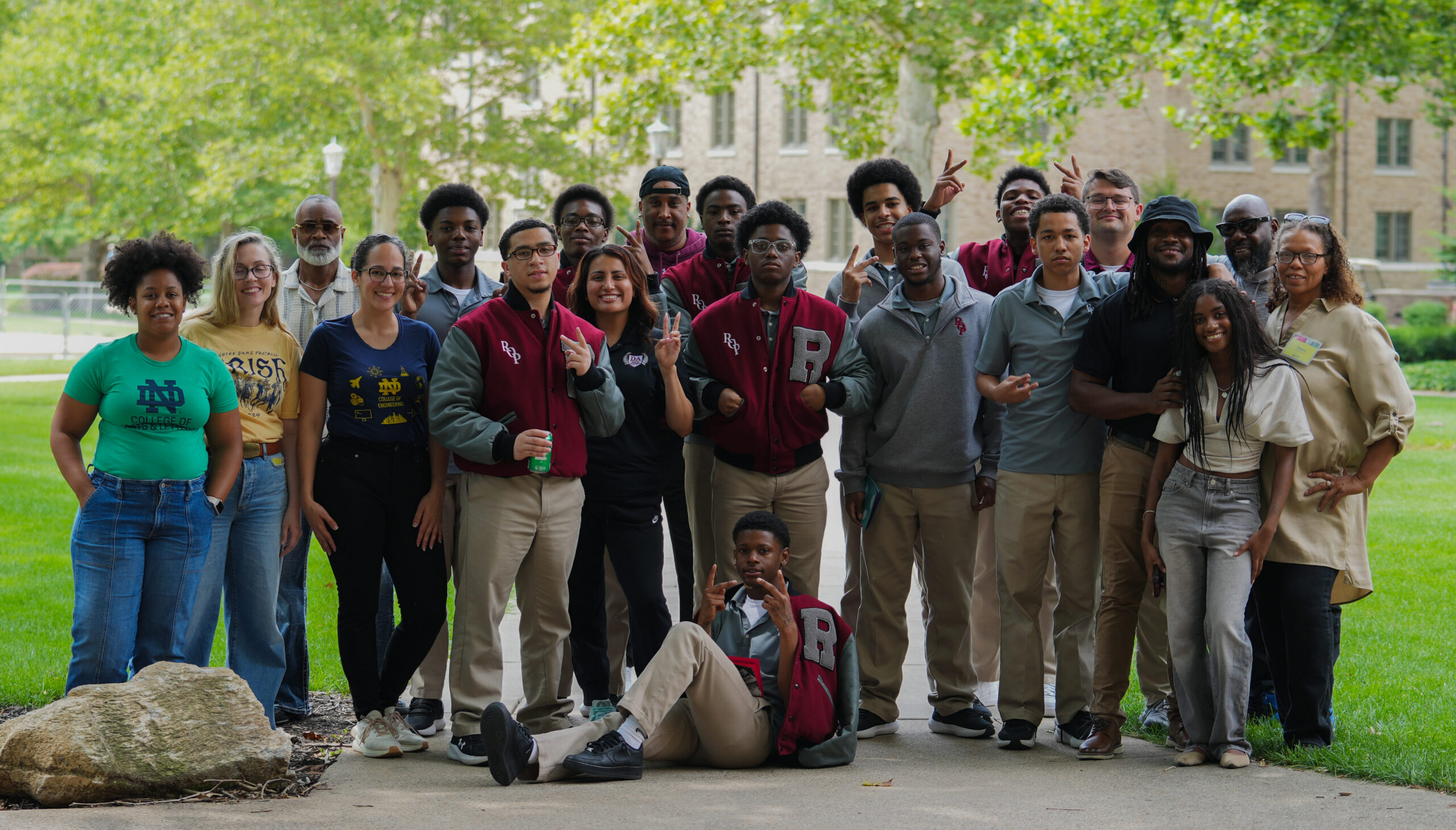
By ignoring young people, safety features typically default to parental controls that monitor and block content. This creates an adversarial relationship that breeds fear and secrecy. “A lot of the research shows that parental controls are privacy-invasive and controlling,” Badillo-Urquiola observes. “They break trust between parent and child because they don’t allow space to negotiate.”
More significantly, parental controls assume a conventional family structure. When Badillo-Urquiola studied what happens when children lack an engaged parent, she exposed a crisis. While only 12 percent of online risks for youth in conventional families are severe, a staggering 53 percent of foster youth encounter severe digital threats that can lead to cyberbullying, rape, and sex trafficking.
To address this crisis, Badillo-Urquiola co-designs digital technologies with vulnerable youth and their support networks to empower them to navigate online spaces safely. “My ultimate goal is for people to understand that there is a human development process all these children are going through,” she says. “By blocking risk—which is one of the factors that helps us learn and obtain resilience—you are blocking that human development process.” Rather than removing risk, Badillo-Urquiola helps digital platforms and policymakers prioritize children’s development.
Discovering supportive online networks
Raised in central Florida, Badillo-Urquiola credits her trajectory to dedicated public school teachers, supportive networks at church, and online communities where she stayed connected to friends and her now-husband, who lived in Mexico at the time. “Technology was a big part of my teenage life,” she says. “At the time, Facebook was just coming online along with Skype and MSN Messenger. My relationship with my husband literally grew with the technology.”
As a child, Badillo-Urquiola watched as her mother experienced domestic violence that led to two divorces by the time she was nine years old. Without online networks, she believes she would have been far more isolated as a teenager. “Technology was there to help build those supportive networks that I didn’t have at home,” she says. “Looking back, I realize how much that influences my research. I want to ensure that every child has those networks so that, even if they are going through horrible situations, they don’t feel helpless. For an at-risk child, that can make all the difference.”
Her lived experiences led her to study psychology in college so she could help youth who have faced similar traumas. While in graduate school, she realized that computer engineering would position her upstream of the harm and allow her to make a systemic impact. Today, her research draws from both psychology and computer science to understand the human impact of social media platforms and contribute to building safe online communities that can serve as lifelines for the next generation of vulnerable youth.
“We are witnessing automated systems and surveillance frameworks that routinely overlook marginalized groups.
My role is to help rehumanize how we build these tools.”
Scaling the work for global impact
Now at Notre Dame, Badillo-Urquiola is working with the Institute for Social Concerns and other University partners to scale her co-design approach globally. In recent literature reviews, she has found that communities from Africa and Latin America are routinely overlooked by policymakers and technologists. “How do we engage with communities outside the status quo, particularly in the Global South?” she asks. “How do we ensure their perspectives actively influence the frameworks we use to create technology?”
For Badillo-Urquiola, communities in the Global South offer vital insights that Western tech models often miss, including their communal care networks and deep social interdependencies. By researching in and with these communities, she seeks to co-design frameworks that prioritize collective well-being over individualistic surveillance.
With funding from a Responsible Computing Challenge Award from the Mozilla Foundation and a Notre Dame Global Mexico Faculty Grant, she and a team of Notre Dame researchers developed the International School of Responsible Computing to advance this mission. Partnering with Mexican universities, they brought together faculty, students, government, and industry representatives in Guadalajara. “The whole idea was to map out what co-designing technology looks like when we work across borders,” she says. “Doing this right takes time because true partnership isn’t transactional. Communities evolve, technology changes, and societal shifts alter what people need. It takes time to understand a community before we can build a solution—together.”
Header and pull quote artwork: “Spring!” by Denys Golden
Courtesy of the artist

A Question of Justice: Alison Rice
How can language studies amplify marginalized voices?

A Question of Justice: Marianne Cusato
How can architects design for dignity?

A Question of Justice: A. Rashied Omar
How can interreligious solidarity be harnessed as a force for justice?

A Question of Justice: Roy Scranton
What does justice look like in the face of civilizational collapse?

A Question of Justice: Nooshin Javadi
How can art help us face injustice with honesty, humor, and hope?
A Question of Justice: Anna Haskins
Why do racial disparities in education persist despite decades of efforts on behalf of equal opportunity and racial justice?