

A Question of Justice:
Alison rice
How can language studies amplify marginalized voices?

“The study of language is only fully realized when we step out of the academy and into the streets, transforming markers of otherness into bonds of friendship,” says Alison Rice, sitting in the living room of a Francophone refugee family in South Bend, Indiana.
As a professor of French and Francophone studies and chair of the Department of Romance Languages & Literatures, Rice has sought to understand how languages can be used either to divide us—as markers of otherness—or to bring us together by inviting us into the rich and diverse cultures of the people who speak them. Whether delivering an invited lecture in Paris or sharing tea in a refugee’s home, she is motivated by the same goal: to use language to transform otherness into shared human dignity.
Speaking with an accent
Rice’s journey toward becoming a French scholar began in the sun-drenched, multicultural mosaic of Riverside, California. Her childhood was a symphony of international voices—Filipino, Chinese, Korean, and Spanish. Yet, it was her immersion in France as a 19-year-old college student that provided her first encounter with linguistic hegemony.
In Paris, classmates called Rice Mademoiselle Dictionnaire, as her obsession with learning a new tongue kept her face buried in a bilingual dictionary. But even as she mastered the vocabulary, she encountered a subtle, persistent barrier: the accent. “To this day, people hear my accent immediately,” Rice says. “They want to know if I’m Polish or Québécoise.”
While Rice came to accept her accent as part of her identity, it also served as a revelation. She learned to see that acoustic marker as a double-edged sword in French society. “When people of diverse origins—perhaps from Africa or the Caribbean—speak with a perfect Parisian accent, nationals often exhibit surprise, as if it’s impossible for them to speak flawless French,” Rice explains. “But if they do have an accent, it becomes an easy way for others to highlight their otherness.” This realization—that language can be used to exclude or to welcome—became the fuel for her research.
Valorizing Francophone women
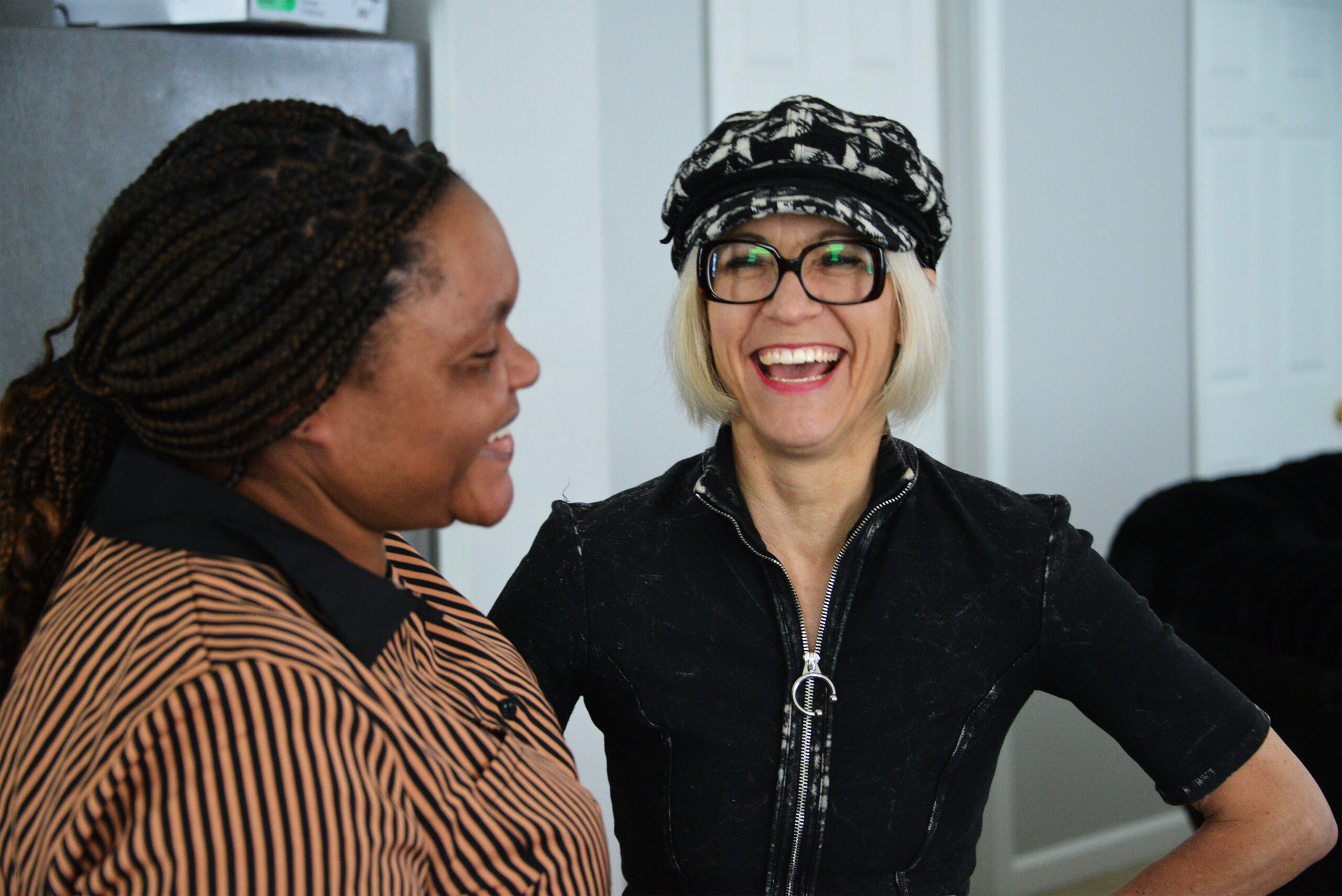
Rice has made it her mission to shatter the view of French literature that centers “the Hexagon”—or continental France. Her work was catalyzed by reading Assia Djebar, the first North African woman elected to the Académie Française. Rice was fascinated by the way Djebar’s writing uses the language of the colonizer to document the very violence that language has facilitated.
Inspired by this complexity, Rice launched a monumental global project: Francophone Metronomes. Drawing on her relationships with women writers from locations as diverse as Japan, Iran, and Senegal, Rice created an archive of modern Francophone writing that exists both in the digital world and in her acclaimed book Worldwide Women Writers in Paris. Through filmed interviews with 18 women writers, she doesn’t just study these women; she provides them with a platform to tell their stories of resilience and accomplishment. In many cases, these writers welcomed Rice into their private spheres precisely because she treats their accents and otherness not as obstacles to be corrected but as essential parts of their humanity.
What makes Rice’s approach unique is her ability to move beyond the role of a detached researcher. She approaches these writers not as an arbiter of the French language but as a fellow traveler in the experience of otherness. This shared sense of otherness has allowed her to build deep, personal bonds with often reclusive authors. For instance, her relationship with Djebar blossomed from academic study into a close personal friendship that endured until the author’s death in 2015.
The study of language is only fully realized when we step out of the academy and into the streets, transforming markers of otherness into bonds of friendship.
Rice describes her work as “chipping away at the divide” between the French mainstream and the wider Francophone world. By centering and showcasing previously marginalized voices, she is using her influence as an internationally recognized scholar to widen the French literary canon.
Amplifying Francophone work for global human rights
Recently, Rice’s research has focused on how novelists—and other public figures like filmmakers and athletes—leverage their cultural capital to promote human rights.

Rice’s work has highlighted writers like Maïssa Bey, an Algerian high school teacher who published under a pseudonym during the 1990s “Black Decade”—while also founding community centers for women’s expression. Or Fatou Diome, a Senegalese writer who moved to France and wrote a best-selling novel that debunks the myths of immigration—while also using her success to fund sustainable start-ups in her homeland. Or Yanick Lahens, a Haitian writer who remained on the island to empower youth through creative and communal outlets like filmmaking—especially following moments like the 2010 earthquake that rocked the island nation.
“I’ve always been turned off by the idea of solely contemplating a text at a distance from pressing needs that surround us,” Rice says. “I’ve been much more interested in how writers make a difference through their work.”
By elevating women’s voices and researching novelists who leverage their platform for human rights, Rice is demonstrating how language can be a living, breathing tool for connection and a powerful instrument for justice.
Header and pull quote artwork: “Ten Days Until” by Anastasia Trusova
Courtesy of the artist

A Question of Justice: Marianne Cusato
How can architects design for dignity?
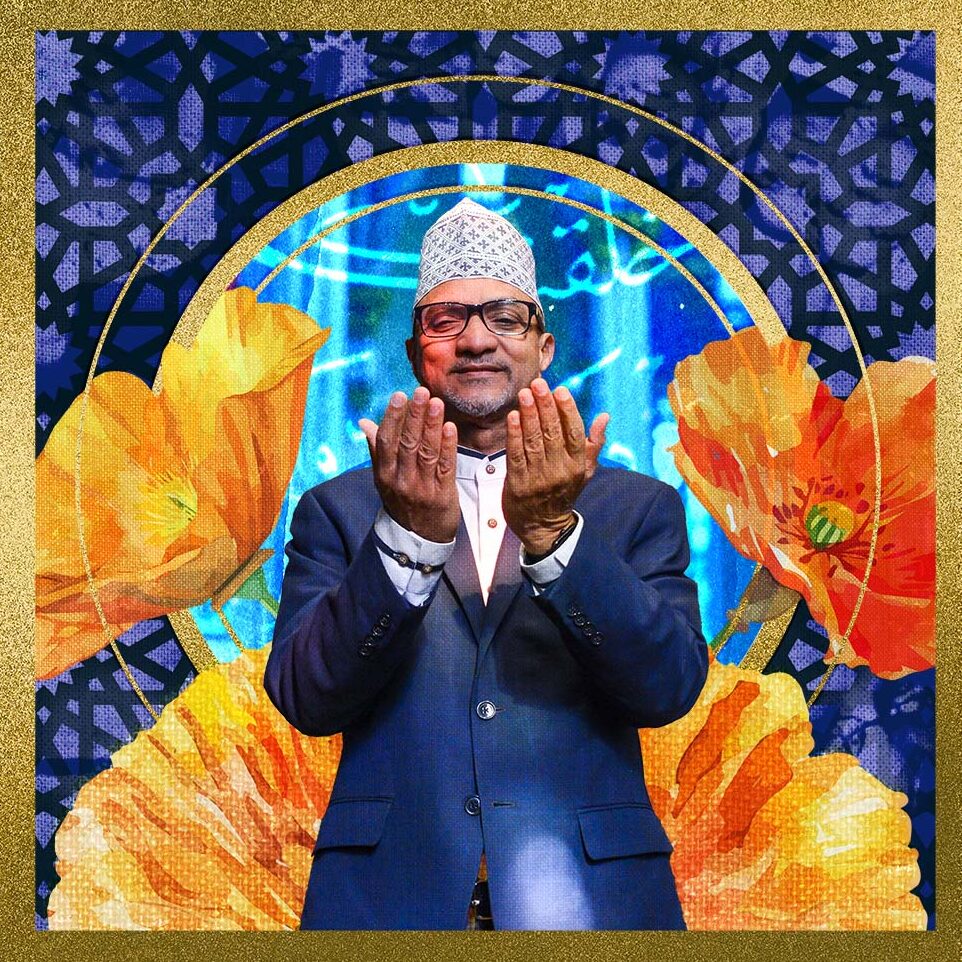
A Question of Justice: A. Rashied Omar
How can interreligious solidarity be harnessed as a force for justice?

A Question of Justice: Roy Scranton
What does justice look like in the face of civilizational collapse?

A Question of Justice: Nooshin Javadi
How can art help us face injustice with honesty, humor, and hope?

A Question of Justice: Anna Haskins
Why do racial disparities in education persist despite decades of efforts on behalf of equal opportunity and racial justice?