
Proximities
Justice Up Close

“To change the world, we are each going to have to find ways to get closer to people who are living on the margins of society.
It’s only in proximity that we get close enough to problems to understand how to solve them and understand their complexity.”
– Bryan Stevenson, lawyer, author, founder and executive director of the Equal Justice Initiative
Proximities seminars are a creative spin on one of the institute’s founding convictions: that the best way to learn about and engage the work of justice is to get proximate with those most affected by injustice—and those working in their communities to undo it. These one-credit S/U seminars for undergraduates provide opportunities to briefly but intensely engage with a question of justice in a specific time and place. They include a fully funded immersive experience during spring break. Consistent with the University’s mission, the aim is to create a sense of human solidarity and concern for the common good that will bear fruit as learning becomes service to justice.
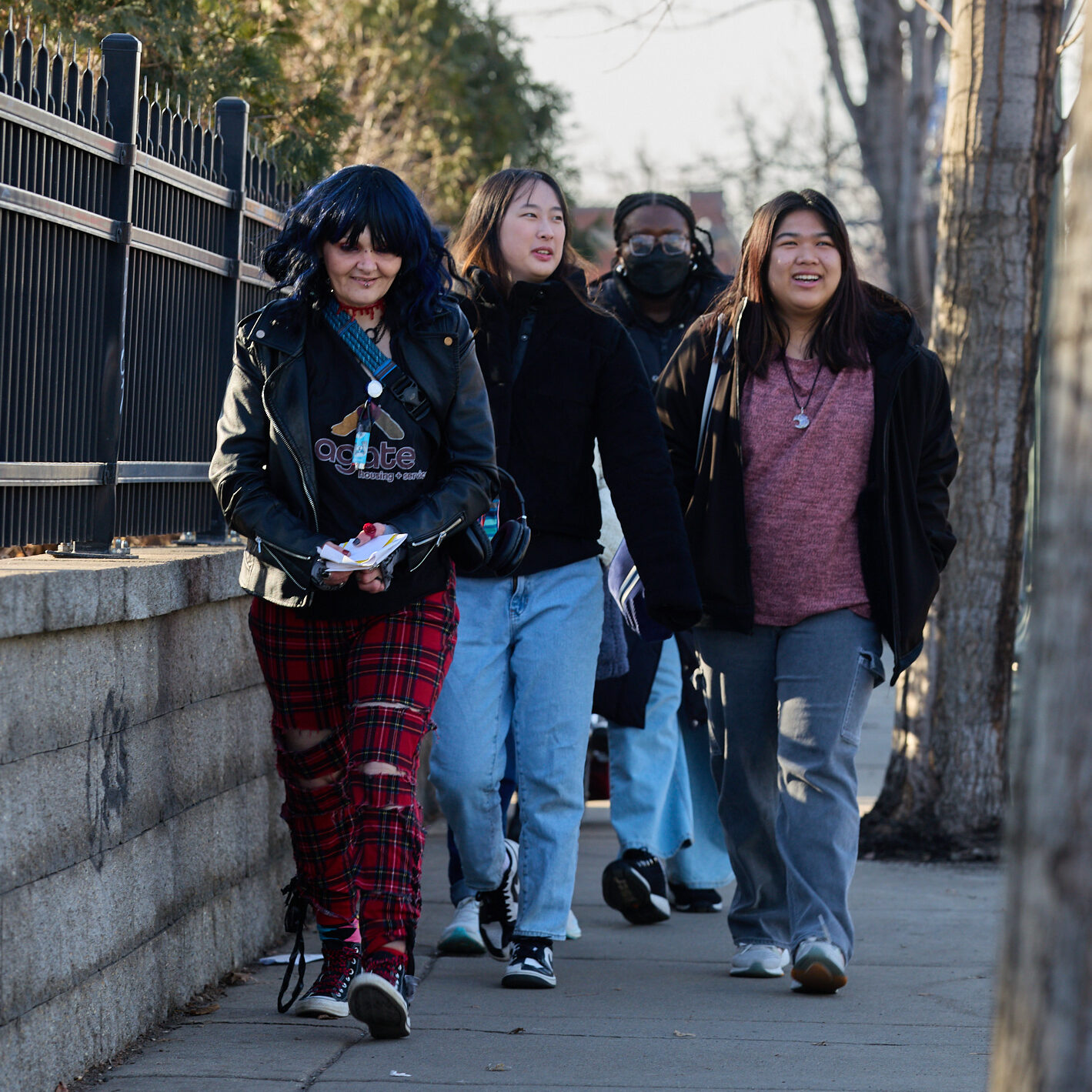
“It’s one thing to hear about environmental injustice. It’s quite another to experience it.”
– Natalia Gonzalez Giraldo ’27
Topics vary each semester to respond to urgent signs of the times. They might include justice at the border in Tucson, Arizona, healthcare in Minneapolis, Minnesota, environmental health in New Orleans, Louisiana, restorative justice in Los Angeles, California, and more.
Questions of justice require getting proximate to them in order to better understand their origins, their impact on human lives, and possible responses. This pursuit of the truth calls for a posture of encounter, of nearness, of proximity. As Pope Francis once stated, “God’s style is never distant, detached or indifferent. On the contrary, it is a style of proximity, compassion, and tenderness.” The seminars are intentionally small so as to cultivate serious discussion and participation with questions of justice.
Proximities are open to all students and offered free of cost. Travel, housing, and food all are provided. In addition to registering for the class, students must apply and sign participation agreements so as to secure spots and make travel arrangements.


“By stepping into shelters, clinics, and government buildings in Minneapolis–St. Paul, I was confronted with the realities of healthcare justice in ways that reading statistics and policies alone could never fully capture.”
– Reese Calalang ’28
Spring 2027 Offerings
Arts of Dignity (SOCO 23205)
Meets: Saturday Feb. 27th & Saturday March 27th from 1-3pm, plus immersive experience March 8-12, 2027
This one-credit S/U course explores how the arts can be utilized as a tool to promote justice and the common good. In order to bridge bridge theory and praxis, the course will involve a five-day immersive experience to Philadelphia, PA over spring break to engage with community organizations and local artists who are navigating the art world through a lens of justice. While there, students will visit museums, artist studios, and local art centers all while practicing their own interpretations and appreciation of art. Class sessions before and after the trip will focus on how the arts can be utilized for justice. This course is open to all undergraduate students. Transportation, food, and lodging are provided. So that we may book flights and make other arrangements, students who add this class will be required to sign a participation agreement. For questions, please contact Geneva Hutchinson, postdoctoral research associate, Institute for Social Concerns (ghutchin@nd.edu). Apply online via the SOCO website: https://socialconcerns.nd.edu/education/undergraduate/programs/proximities/. Application opens Nov. 1, 2026, and closes Dec. 1, 2026.
Migrant Farmworker Solidarity: Coalition of Immokalee Workers (SOCO 23210)
Meets: Saturday Feb. 27th & Saturday March 27th from 1-3pm, plus immersive experience March 8-12, 2027
This one-credit S/U course introduces students to the daily experience of migrant farm workers in the United States, and examines the economic, legal, and social issues surrounding migrant farm labor and the food supply chains in which we all participate. Students will travel to Immokalee, FL to learn alongside the Coalition of Immokalee Workers (CIW), a worker-based human rights organization internationally recognized for its achievements in the fields of social responsibility, human trafficking, and gender-based violence at work. This course is open to all undergraduate students. Transportation, food, and lodging are provided. So that we may book travel and make other arrangements, students who add this class will be required to sign a participation agreement. For questions, please contact Mike Hebbeler, Institute for Social Concerns (mhebbele@nd.edu). Apply online via the SOCO website: https://socialconcerns.nd.edu/education/undergraduate/programs/proximities/. Application opens Nov. 1, 2026, and closes Dec. 1, 2026.
Justice at the Border (SOCO 23204)
Meets: Saturday Feb. 27th & Saturday March 27th from 1-3pm, plus immersive experience March 7-12, 2027
This one-credit S/U course examines why migrants leave their home countries, what they encounter at the border, responses from U.S.-based citizen and faith groups, and the effectiveness of U.S. enforcement policies. In order to bridge theory and praxis, the course will involve an immersive experience to the Tucson, AZ borderlands area during Spring Break. While there, students will have the opportunity to observe legal proceedings, attend a humanitarian aid training, tour a Border Patrol facility, listen to stories from migrant families, visit the border wall, and participate in a humanitarian desert trip. Class sessions before and after the trip will focus on the experience of migration and possible responses inspired by Catholic social teaching. This course is open to all undergraduate students. Transportation, food, and lodging are provided. So that we may book travel and make other arrangements, students who add this class will be required to sign a participation agreement. For questions, please contact Felicia Johnson O’Brien, program director of justice education, Institute for Social Concerns (f.obrien@nd.edu). Apply online via the SOCO website: https://socialconcerns.nd.edu/education/undergraduate/programs/proximities/. Application opens Nov. 1, 2026, and closes Dec. 1, 2026.
Reimagining Crime and Justice (SOCO 23211 )
Meets: Saturday Feb. 27th & Saturday March 27th from 1-3pm, plus immersive experience March 8-12, 2027
This one-credit S/U course examines how organizations have been practicing moral imagination in the space of mass incarceration, reimagining the support that can be provided for communities before, during, and after incarceration. In order to bridge theory and praxis, the course will involve an immersive experience to the Chicago, IL area during Spring Break. While there, students will have the opportunity to engage with grassroots activists and policy-makers across the city, participate in jail support at Cook County Jail, provide direct prisoner support through Midwest Books to Prisoners, listen to stories from formerly incarcerated community members, and engage in Restorative and Transformative Justice practices. Class sessions before and after the trip will focus on the experience of incarceration and possible responses inspired by Catholic social teaching. This course is open to all undergraduate students. Transportation, food, and lodging are provided. So that we may book travel and make other arrangements, students who add this class will be required to sign a participation agreement. For questions, please contact Samuel Sokolsky-Tifft, Institute for Social Concerns (ssokolsk@nd.edu). Apply online via the SOCO website: https://socialconcerns.nd.edu/education/undergraduate/programs/proximities/. Application opens Nov. 1, 2026 and closes Dec. 1, 2026.
Whole Person Healthcare (SOCO 23203)
Meets: Saturday Feb. 27th & Saturday March 27th from 1-3pm, plus immersive experience March 8-12, 2027
This one-credit S/U course examines the U.S. healthcare’s intersections with poverty, housing, addiction, and migration. We will do so through the lens of Minnesota’s healthcare system, recently ranked as one of the best in the United States. What structures are in place that support people’s flourishing? Where are there gaps? Why? In order to bridge theory and praxis, the course will involve a 5 day immersive experience to Minneapolis-St. Paul, MN over Spring Break. We will hear from experts in the healthcare field, visit non profit organizations working in healthcare, and listen to people impacted by healthcare concerns. Class sessions before and after the trip will focus on healthcare justice and possible responses inspired by Catholic social teaching. This course is open to all undergraduate students. Transportation, food, and lodging are provided. So that we may book travel and make other arrangements, students who add this class will be required to sign a participation agreement. For questions, please contact Ed Jurkovic, Institute for Social Concerns (ejurkovi@nd.edu). Apply online via the SOCO website: https://socialconcerns.nd.edu/education/undergraduate/programs/proximities/. Application opens Nov. 1, 2026, and closes Dec. 1, 2026.
.

Application
The application for Spring 2027 will open on November 1, 2026 and close December 1, 2026. Select participants will be notified soon thereafter.
Questions?
If you have questions or want to make an appointment to speak with one of our program directors, contact Emily Garvey at garvey.32@nd.edu.